
Zippers, buckles, webbing and related accessories affect how a backpack opens, closes, adjusts and carries in daily use. They also influence appearance, construction complexity and unit cost, so component selection should be confirmed together with the backpack structure rather than after sampling has started.
For OEM and private-label projects, Navorex Bags reviews visible and functional components against the selected materials, dimensions, compartment layout and intended application. Confirmed components are included in the sample specification and checked again before bulk production.
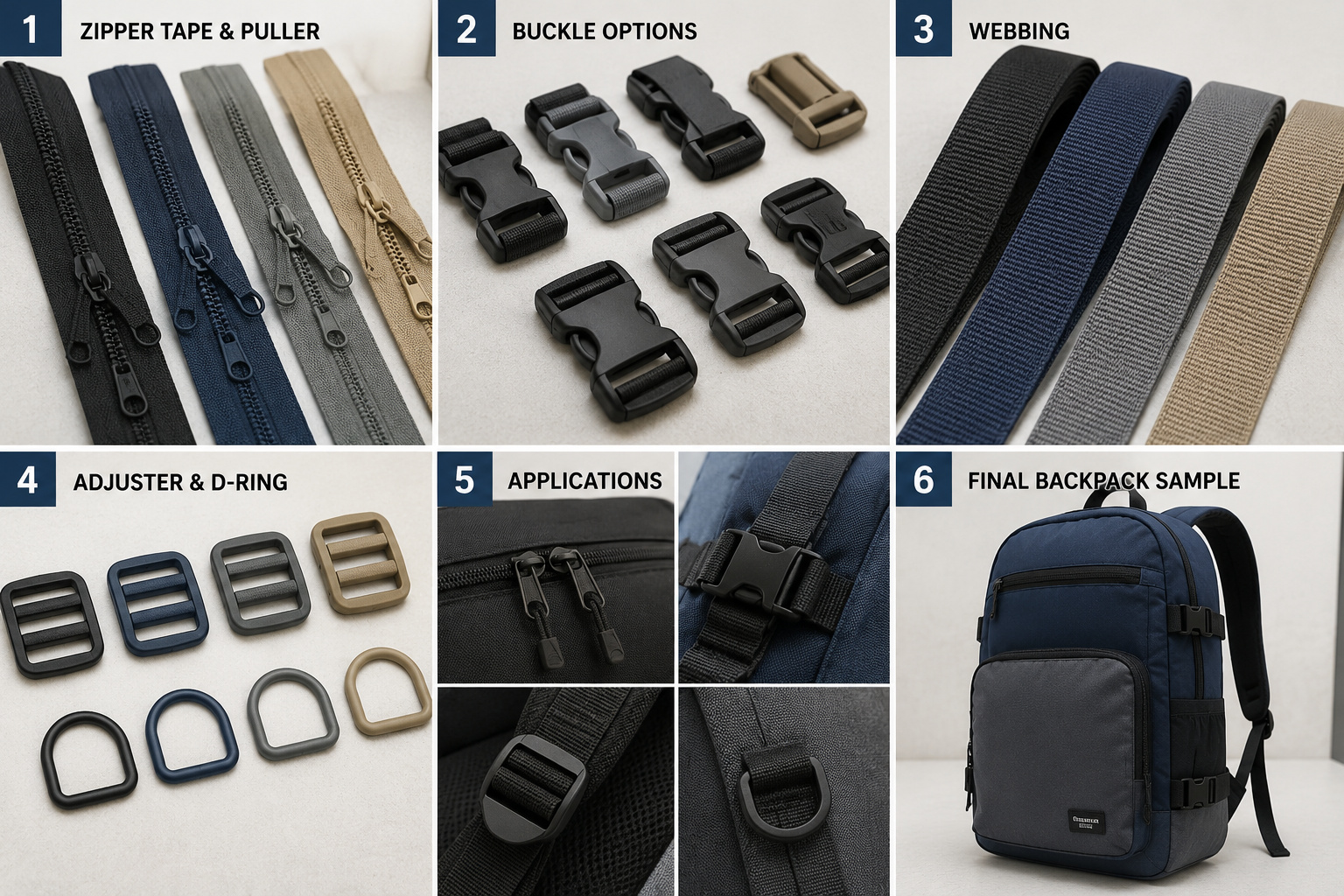 Zipper Selection for Backpack Compartments
Different backpack sections may require different zipper lengths and configurations depending on the opening structure.
Main compartments, front pockets, laptop sections and internal pockets do not necessarily use the same zipper specification. During development, we review zipper placement together with the panel shape, opening direction and pocket construction.
Zipper tape and puller color should also coordinate with the main fabric and other visible trims. Buyers developing a specific colorway can review these components together with our Colors & Surface Finishes options.
For sample approval, zipper alignment, opening and closing function, puller position and sewing around the zipper area should be checked on the finished backpack rather than from loose components alone.
Buckles, Adjusters and Webbing Connections
Buckles and adjusters are commonly used where backpack straps or compression systems need to be secured or adjusted.
Webbing width, buckle size and attachment position should match the carrying structure. A component that is visually suitable may not fit the required strap width or sewing construction, so these parts need to be reviewed as a complete system.
Depending on the backpack design, the specification may include:
- Side-release buckles
- Strap adjusters
- Webbing
- D-ring style connections
- Strap loops
- Riveted or sewn attachment points
The exact component arrangement depends on the backpack type and approved design.
Projects involving significant changes to straps, side compression systems or carrying structures should also be reviewed together with Size, Capacity & Compartment Design.
Match Components With Fabric and Product Use
Accessories should be selected around the backpack material and intended use.
A school or business backpack may require a relatively clean trim combination, while travel, outdoor or tactical-style structures may use more visible webbing, adjustment points and reinforced connections.
Color matching should include the main fabric, lining, zipper tape, pullers, webbing and buckles. Black is not automatically identical across different materials, and navy, gray or beige components may also vary slightly between suppliers and material batches.
For this reason, the final combination should be approved on the actual sample.
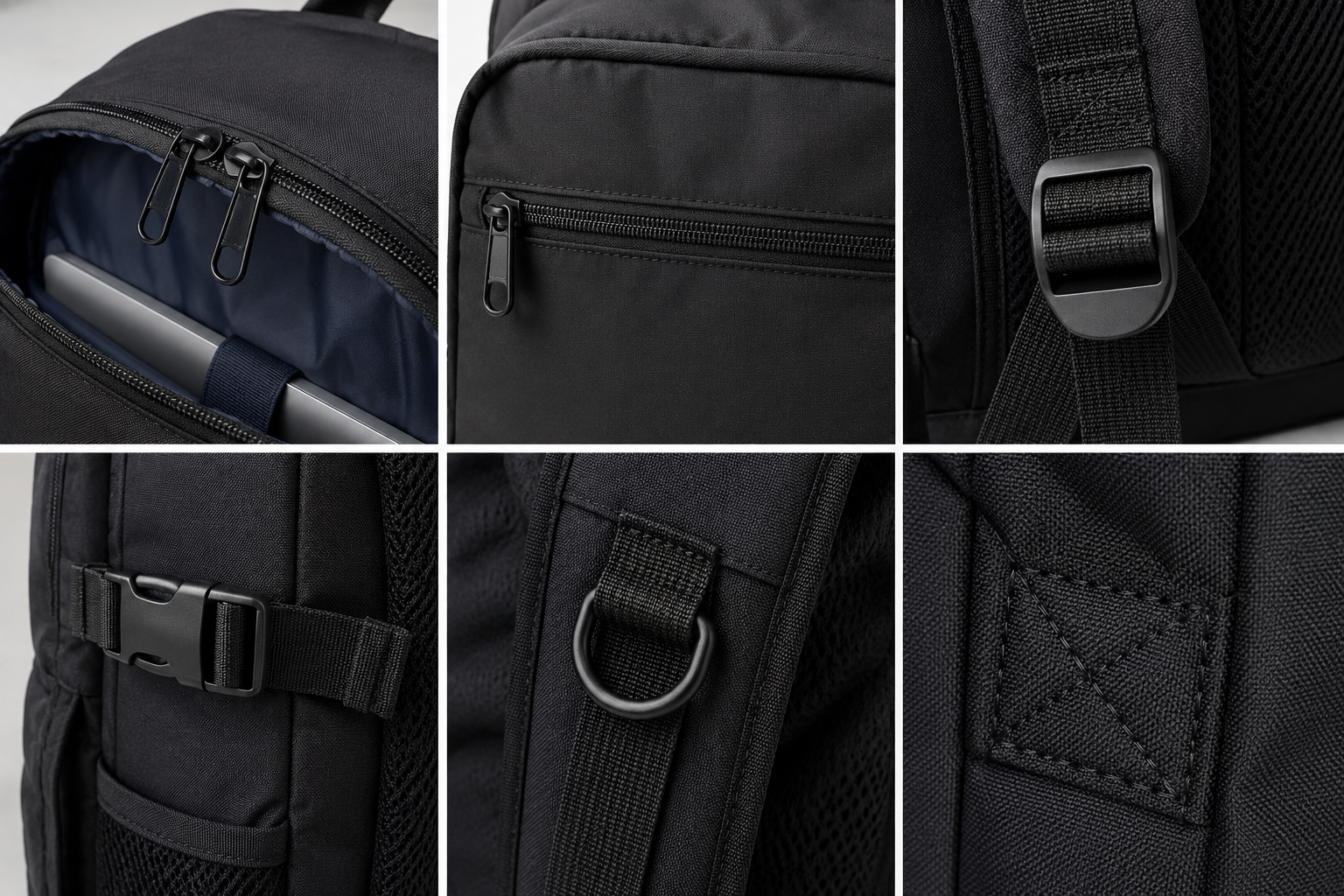
Sample Approval and Bulk Assembly Control
Standard backpack samples generally take around 5–10 working days. More complex developments involving new structures, special materials or additional component sourcing may require around 10–15 days.
During sample review, components are checked together with the backpack structure for position, function, color coordination and workmanship.
After approval, bulk production moves through cutting, sewing and component assembly according to the confirmed specification. Our Backpack Sewing & Assembly process covers how panels, straps, zippers, webbing and related parts are assembled during production.
Standard constructions usually start around 300–500 pcs. Less common colors, specially sourced trims or more complex accessory combinations may require higher quantities depending on component availability.
What to Provide for an Accessory Review
For a more accurate review and quotation, provide the backpack style, reference sample or tech pack, required zipper and buckle details where known, webbing requirements, preferred colors, estimated quantity and intended application.
If a particular component is critical to the design, a physical sample or clear close-up reference is useful. Confirming these details before sampling helps avoid substitutions or structural changes after the backpack design has already been approved.