
Sewing and assembly are the main stages where prepared backpack panels become a finished product. Pocket position, seam alignment, shoulder-strap attachment, zipper installation and reinforcement all affect the final structure and appearance.
At Navorex Bags, sewing follows the approved sample and confirmed production specification. Cut panels, lining, straps and other prepared parts are organized by style and color before entering the sewing line, helping maintain consistency across OEM and private-label bulk orders.
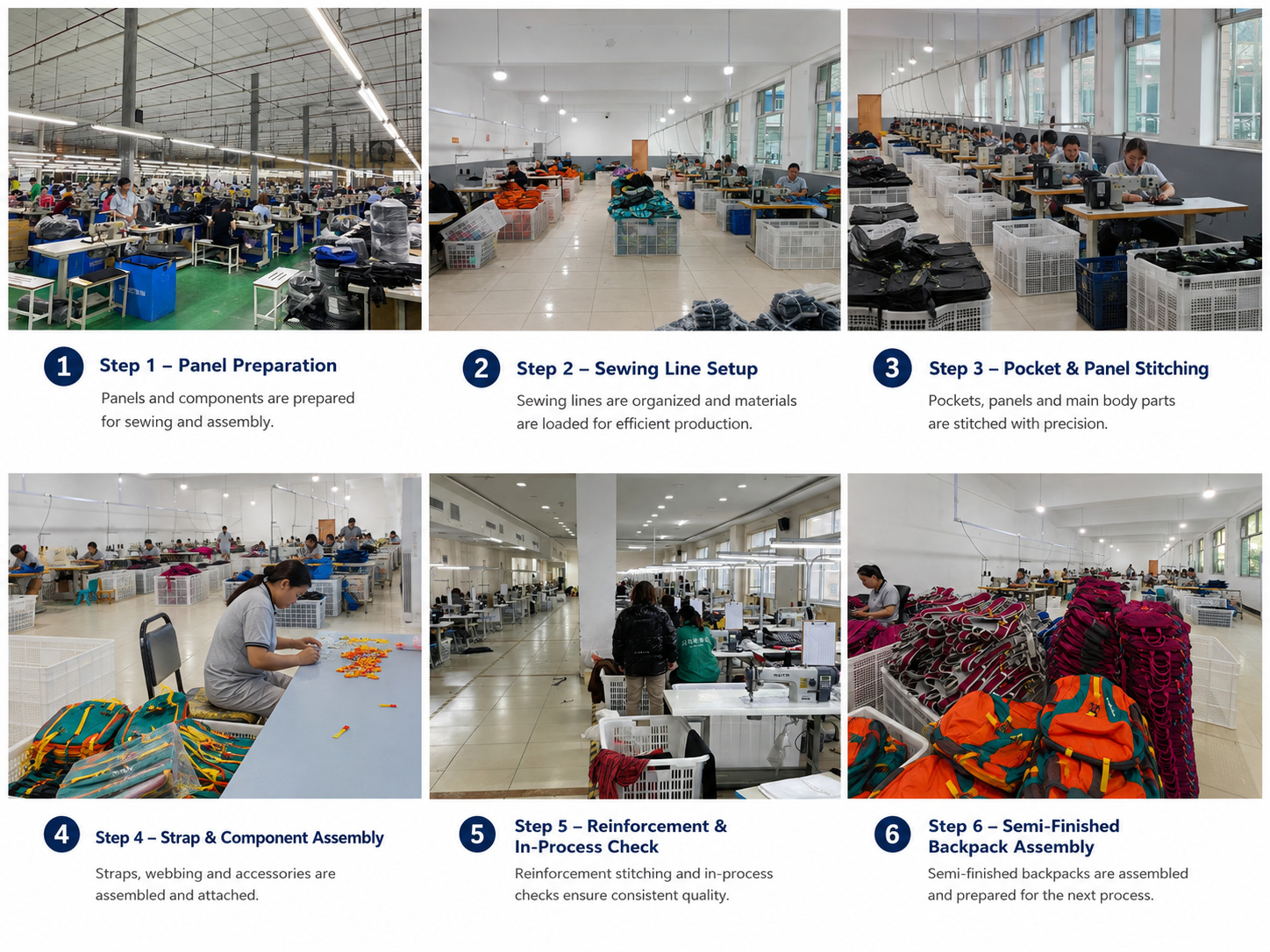 From Cut Panels to Sewing Production
Sewing begins after the required backpack panels have been cut, sorted and checked against the approved construction.
Main body panels, front and side pockets, lining sections, shoulder-strap parts and other components are grouped before they enter production. This reduces the risk of mixing different colors, sizes or structures when several backpack orders are running at the same time.
The preceding Fabric Cutting & Panel Preparation stage establishes the panel dimensions and component sets used for sewing.
The sewing sequence depends on the backpack design. A simple drawstring backpack requires fewer operations than a laptop, travel or hiking backpack with multiple compartments, padded sections and additional webbing.
Pocket, Lining and Main Body Assembly
Backpacks are normally assembled through a series of smaller sewing operations rather than closing the complete bag in one step.
Depending on the approved design, production may include front pockets, internal organizers, laptop compartments, lining, zipper sections, side pockets and main body panels.
Lockstitch and double-needle sewing equipment are used where appropriate for backpack construction. Binding and programmable pattern sewing equipment can also support relevant operations depending on the product structure.
Branding applied to individual panels should already be confirmed before those sections are fully assembled. Projects involving panel-based branding can also be reviewed through our Logo Printing & Embroidery process.
Shoulder Straps and Reinforcement Points
Shoulder straps, handles and webbing connections are important load-bearing areas.
Their attachment position needs to match the approved sample, and reinforcement is added at relevant stress points according to the selected construction. Our available production equipment includes bar-tack and other sewing machines used for backpack reinforcement and assembly.
Reinforcement requirements differ between products. A lightweight promotional backpack does not require the same construction as a larger travel or tactical-style backpack.
The goal is not to add unnecessary stitching, but to follow the structure approved for the intended backpack application.
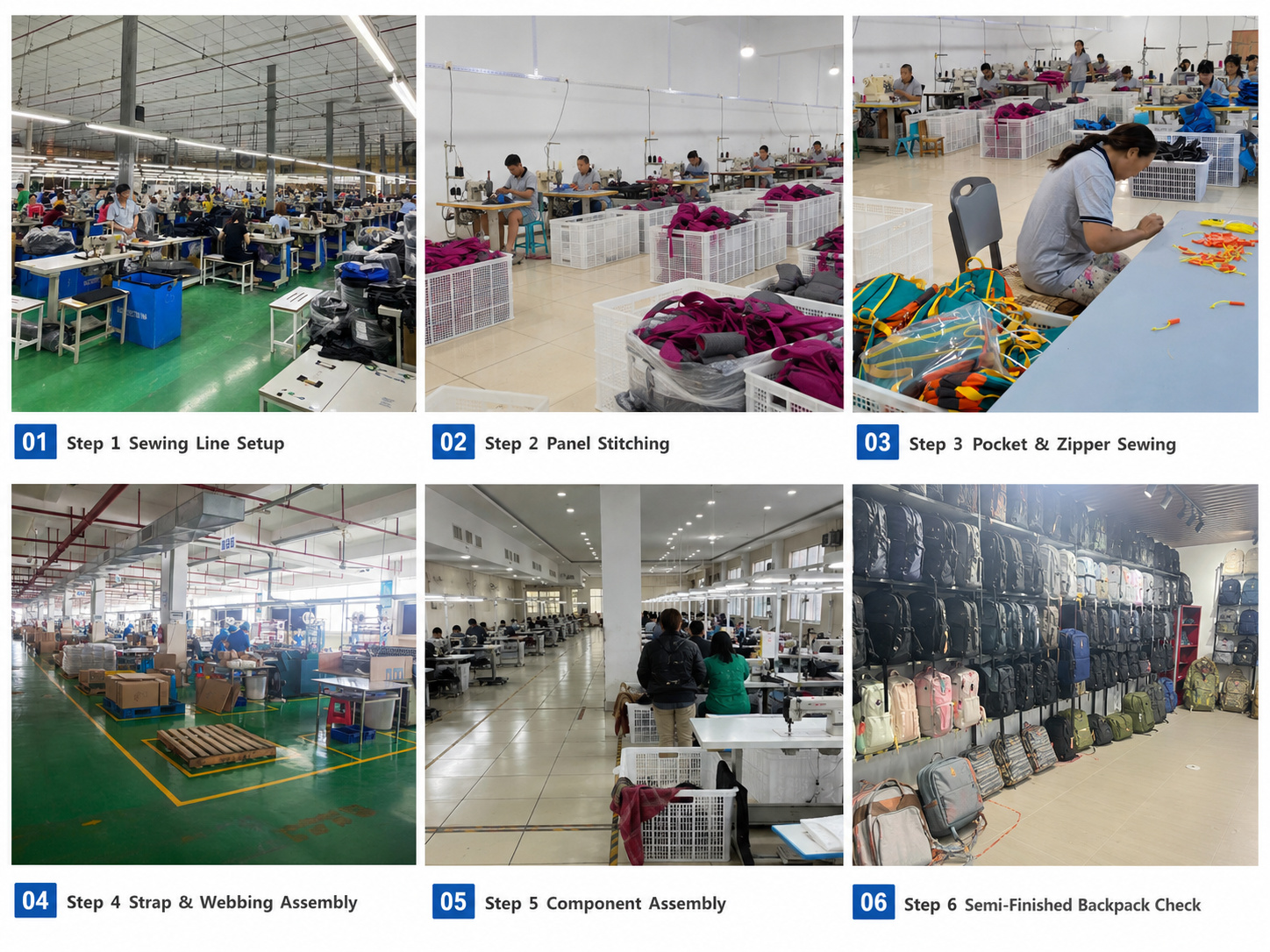 Zippers, Buckles and Hardware During Assembly
Zippers, buckles, adjusters and webbing must be installed in the correct position during assembly so that the finished backpack functions as approved.
Zipper alignment, strap adjustment and buckle orientation are checked together with the surrounding sewing construction. Buyers requiring specific component combinations can review the dedicated Zipper, Buckle & Hardware Assembly stage.
Component changes should be confirmed during sampling because differences in buckle size, zipper structure or webbing width can affect the sewing construction.
In-Process Inspection Before Finishing
Inspection is carried out during production rather than waiting until every backpack is completed.
Checks can include stitching, seams, panel alignment, dimensions, pocket position, straps, reinforcement, zipper function and visible workmanship against the approved sample.
Non-conforming items are separated for correction before they proceed to final finishing and packing. Completed backpacks then move to Finishing & Packing for final appearance checks, labeling and bulk packing.
Standard backpack constructions usually start around 300–500 pcs. After sample and specification approval, bulk production typically requires around 25–40 days, depending on quantity, material readiness and sewing complexity.