
Zippers, buckles, adjusters, webbing and related hardware are functional parts of a backpack, not only visual accessories. Their size, position and connection method affect opening, adjustment, carrying structure and the finished appearance of the product.
At Navorex Bags, these components are assembled according to the approved backpack sample and confirmed specification. The selected zipper, buckle, webbing and hardware combinations are reviewed during sampling before they are released for bulk production.
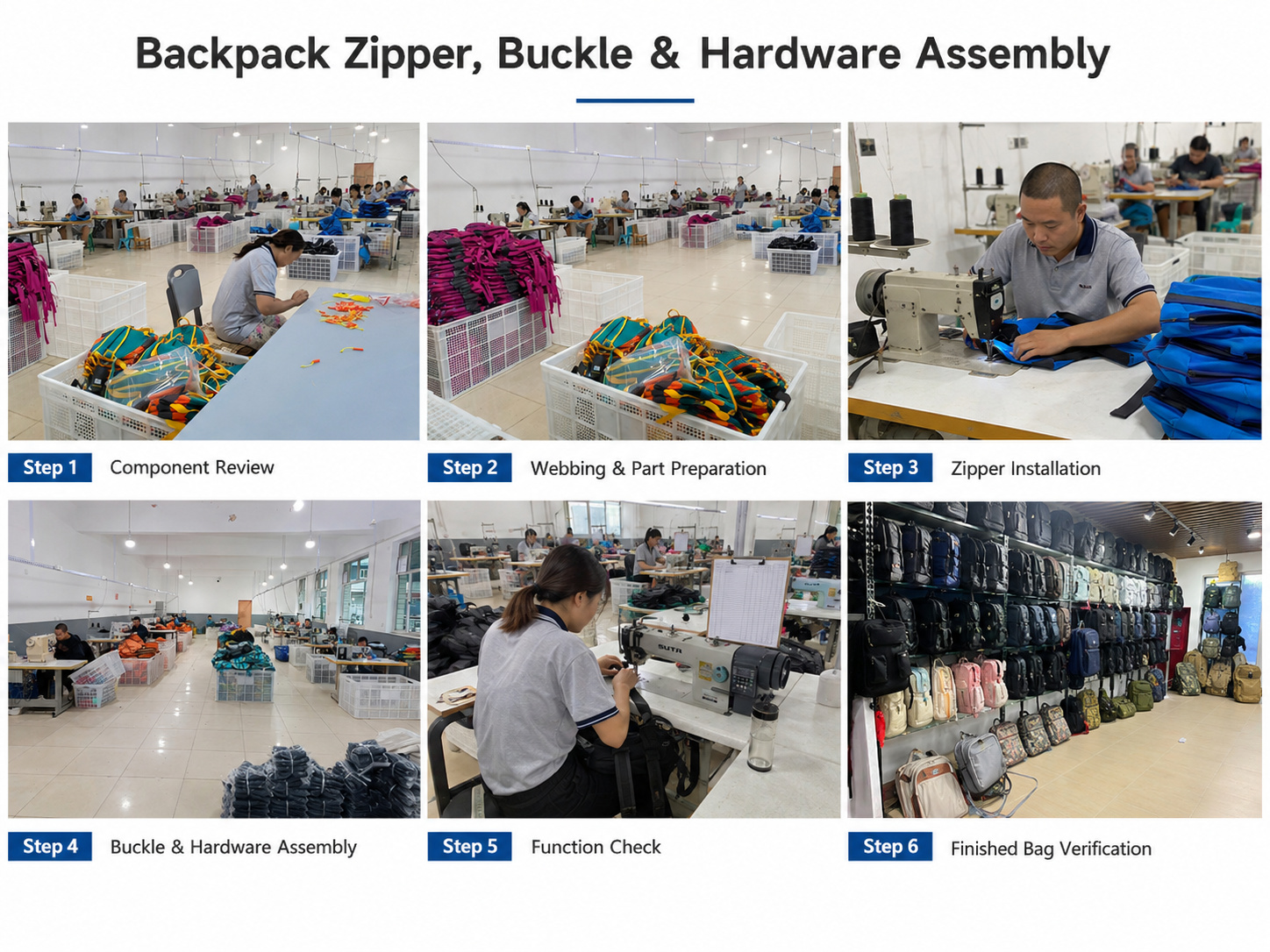 Component Matching Before Assembly
Hardware assembly starts with the components already confirmed during OEM development.
Depending on the backpack construction, this may include zipper tape, pullers, buckles, adjusters, webbing and other connection parts. Component width, color and structure need to match the surrounding fabric panels and strap system.
A buckle should fit the selected webbing width, while zipper length and opening direction need to match the pocket or compartment where they will be installed.
Buyers defining these components during development can review our Zippers, Buckles & Accessories options before sample approval.
Zipper Installation for Compartments and Pockets
Main compartments, front pockets, laptop sections and internal storage areas may use different zipper lengths and constructions.
Zippers are positioned and sewn together with the relevant panels during backpack assembly. Alignment is important because an incorrectly positioned zipper can affect pocket shape, opening movement and the overall appearance of the finished bag.
During production, zipper installation is checked together with surrounding stitching, panel alignment and puller position.
Component changes should be confirmed before bulk sewing begins, because changing zipper size or construction later may require adjustments to the prepared panels.
Buckles, Adjusters and Webbing Connections
Buckles and adjusters are commonly connected to shoulder straps, side compression systems and other adjustable sections.
Webbing placement and attachment length should follow the approved sample. The buckle orientation also needs to remain consistent so that straps can be adjusted as intended.
These components are integrated during the broader Backpack Sewing & Assembly process rather than being added as an unrelated final step.
Where reinforcement is required at strap or webbing connection points, the surrounding sewing construction is checked together with the hardware installation.
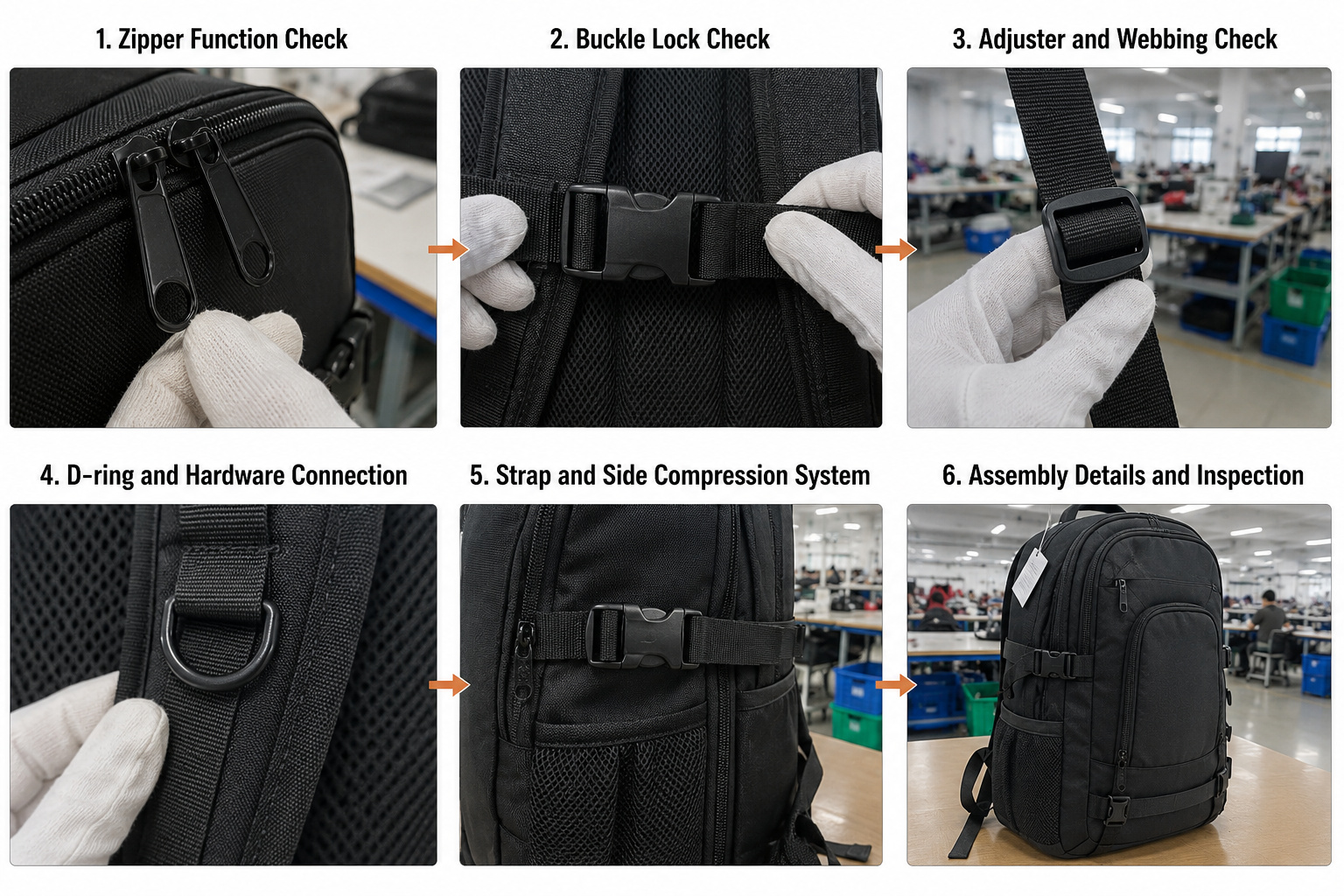 Function and In-Process Inspection
Hardware inspection focuses on both installation and basic function.
Checks can include zipper opening and closing, puller position, buckle connection, strap adjustment, webbing attachment and visible alignment against the approved sample.
The surrounding sewing area is also reviewed because a correctly sourced component can still perform poorly if it is installed in the wrong position or attached inconsistently.
Non-conforming items are separated for correction before the backpack proceeds to final finishing and packing.
Sample Approval and Bulk Production Control
Standard backpack samples typically require around 5–10 working days. More complex projects involving new structures, special components or additional sourcing may require around 10–15 days.
Standard constructions usually start around 300–500 pcs, while specially sourced hardware, less common colors or project-specific components may require higher quantities.
After the sample and specification are approved, normal bulk production is around 25–40 days, depending on order quantity, material readiness and construction complexity.
Finished backpacks then move to Finishing & Packing for final appearance checks, labeling, packing and shipment preparation.
What to Provide for Hardware Assembly Review
For an accurate review, provide the backpack style, reference sample or tech pack, zipper and buckle requirements, webbing width where known, preferred colors, estimated quantity and any critical connection details.
Clear component references before sampling help reduce substitutions, structural changes and production delays after assembly has started.