
Fabric cutting converts the approved backpack specification into the individual panels and components required for sewing. Cutting accuracy affects finished dimensions, pocket position, zipper alignment, compartment structure and the overall shape of the backpack, so this stage needs to follow the approved sample rather than approximate measurements.
At Navorex Bags, confirmed outer fabrics, lining and supporting materials move into cutting after material preparation. Main body panels, front and side pockets, lining sections, shoulder-strap parts and other construction pieces are prepared according to the approved backpack design before being organized for sewing and assembly.
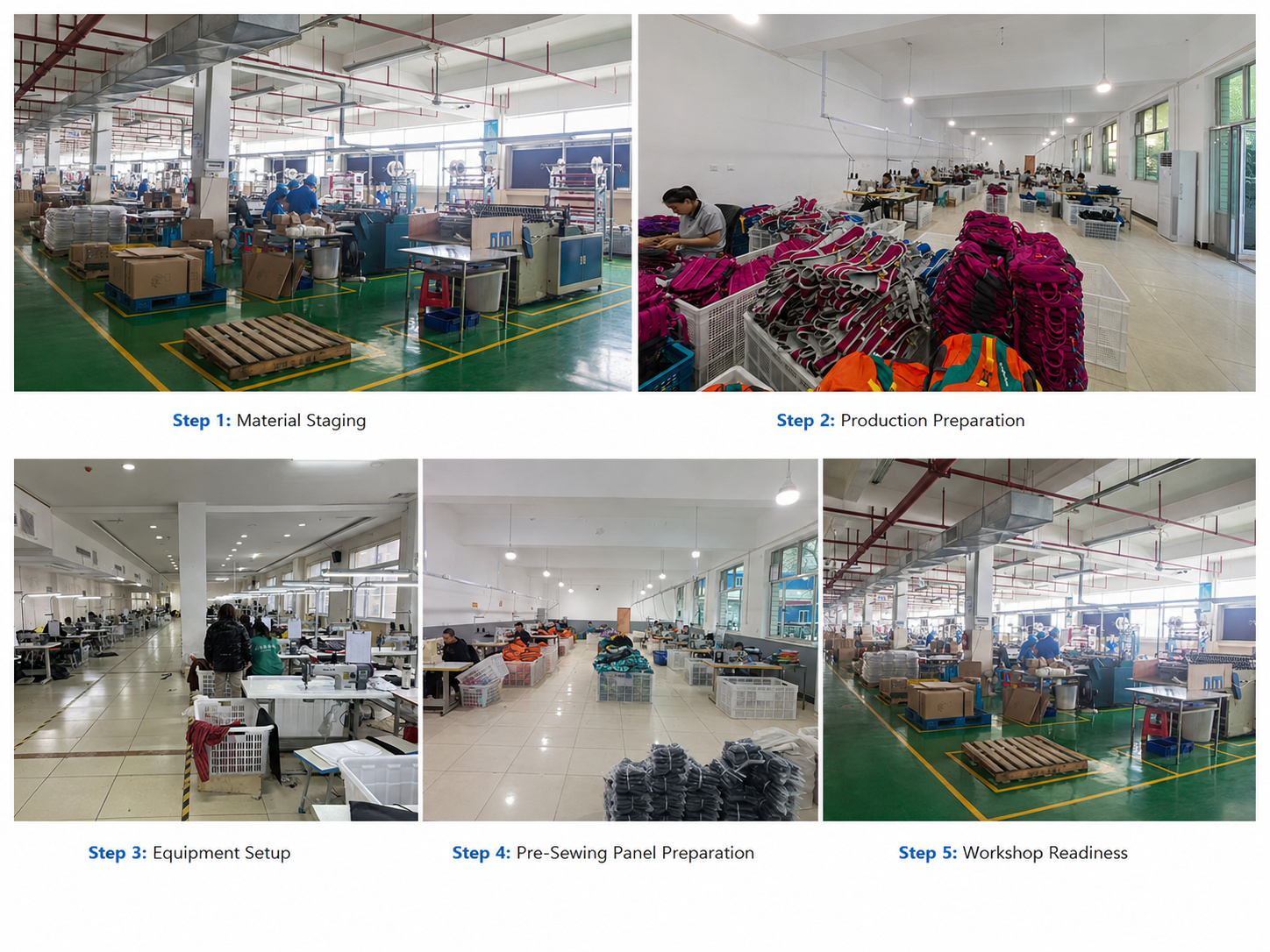 Confirm Materials Before Fabric Cutting
Cutting should begin only after the production materials are matched with the approved specification.
Outer fabric, lining, foam and other required materials are separated by style and color before production. This helps prevent different specifications from being mixed when several backpack versions are scheduled at the same time.
The preceding Material Inspection & Preparation stage covers the material and component checks completed before cutting starts.
Material type also affects handling. Oxford, nylon, polyester, canvas and other fabrics can differ in thickness, stiffness and surface behavior, so panel preparation should follow the material confirmed during sampling.
Panel Layout and Cutting Preparation
Each backpack construction is made from multiple pieces rather than one continuous fabric section.
Depending on the design, cutting preparation may include:
- Front and back body panels
- Side and bottom panels
- Front-pocket sections
- Internal and external pocket panels
- Lining sections
- Shoulder-strap parts
- Back-panel parts
- Other reinforcement or construction pieces
The number and shape of panels vary according to backpack size, compartment layout and product type.
A simple drawstring backpack requires fewer construction pieces than a multi-compartment laptop, travel or outdoor backpack. More complex structures therefore require additional preparation and panel control before sewing.
Cutting Accuracy and Dimension Control
Our backpack production equipment includes automatic cutting capability for applicable production work.
Cutting accuracy is important because even small panel differences can influence zipper installation, pocket alignment and finished backpack dimensions once several pieces are sewn together.
Production panels are prepared according to the approved construction and checked before they move to the next stage. Particular attention is given to pieces that determine the backpack outline, compartment position and major connection points.
For OEM projects with changed dimensions or internal structures, the final cutting reference follows the approved sample and confirmed Size, Capacity & Compartment Design specification.
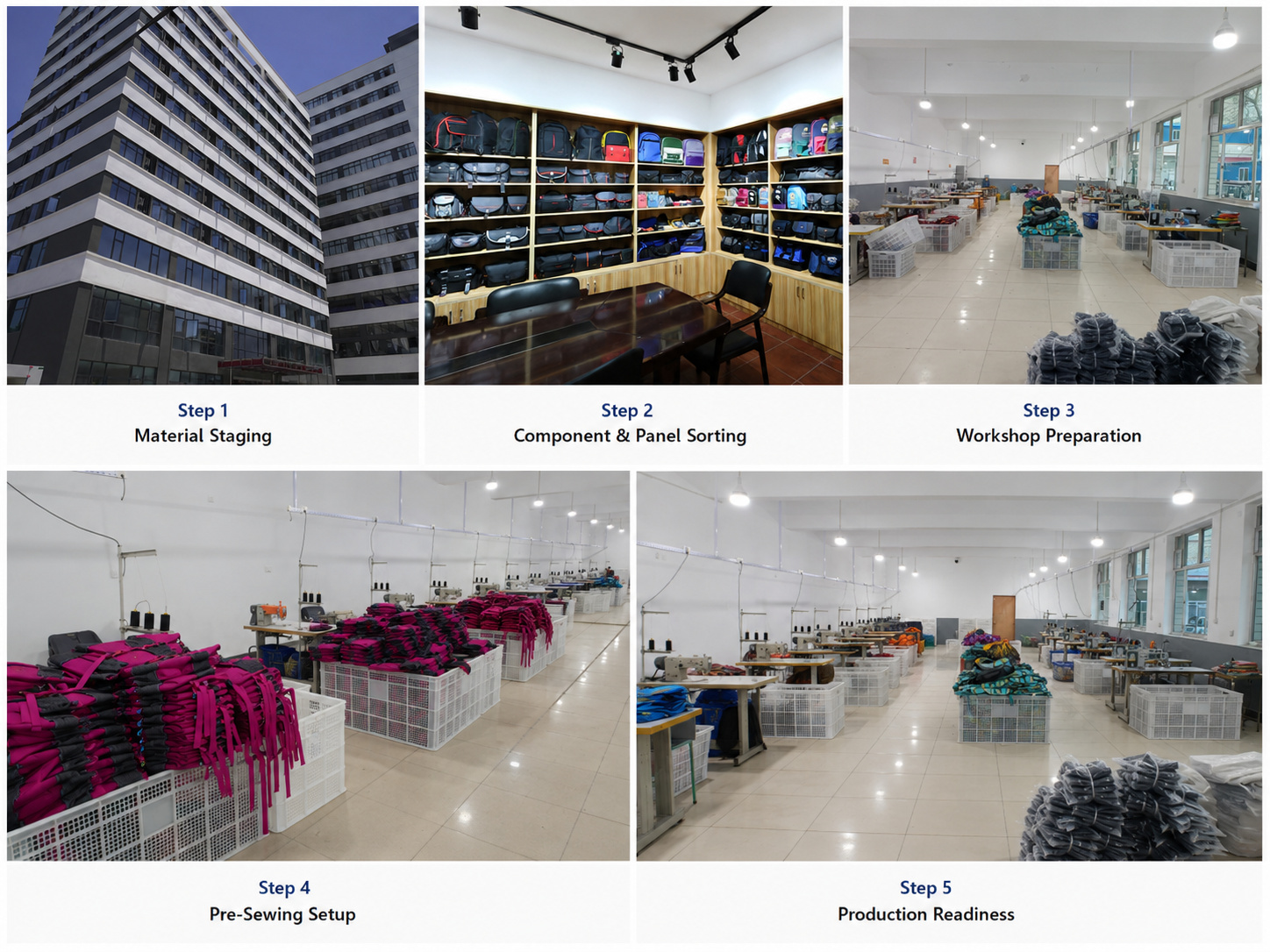 Panel Sorting Before Sewing
After cutting, production pieces need to remain organized by backpack style, color and construction.
Main panels, pocket sections, lining and strap components are grouped before they enter sewing. Clear panel classification reduces the risk of missing or mixed parts during bulk production and makes the following assembly process easier to control.
The prepared panels then move into Backpack Sewing & Assembly, where pockets, lining, zippers, shoulder straps, back sections and main body panels are assembled according to the approved sample.
How Cutting Complexity Affects Production
Fabric cutting requirements vary with backpack design.
A backpack with several compartments, curved panels, padded sections or additional pockets requires more individual pieces and production handling than a simpler construction. Material thickness, order quantity and the number of colors can also affect cutting preparation.
Standard backpack constructions usually start around 300–500 pcs. After sample and specification approval, normal bulk production is around 25–40 days, depending on material readiness, order quantity and construction complexity.
Providing accurate dimensions, drawings or a reference sample before development helps us confirm the required panel structure earlier and reduces changes after bulk cutting has begun.