
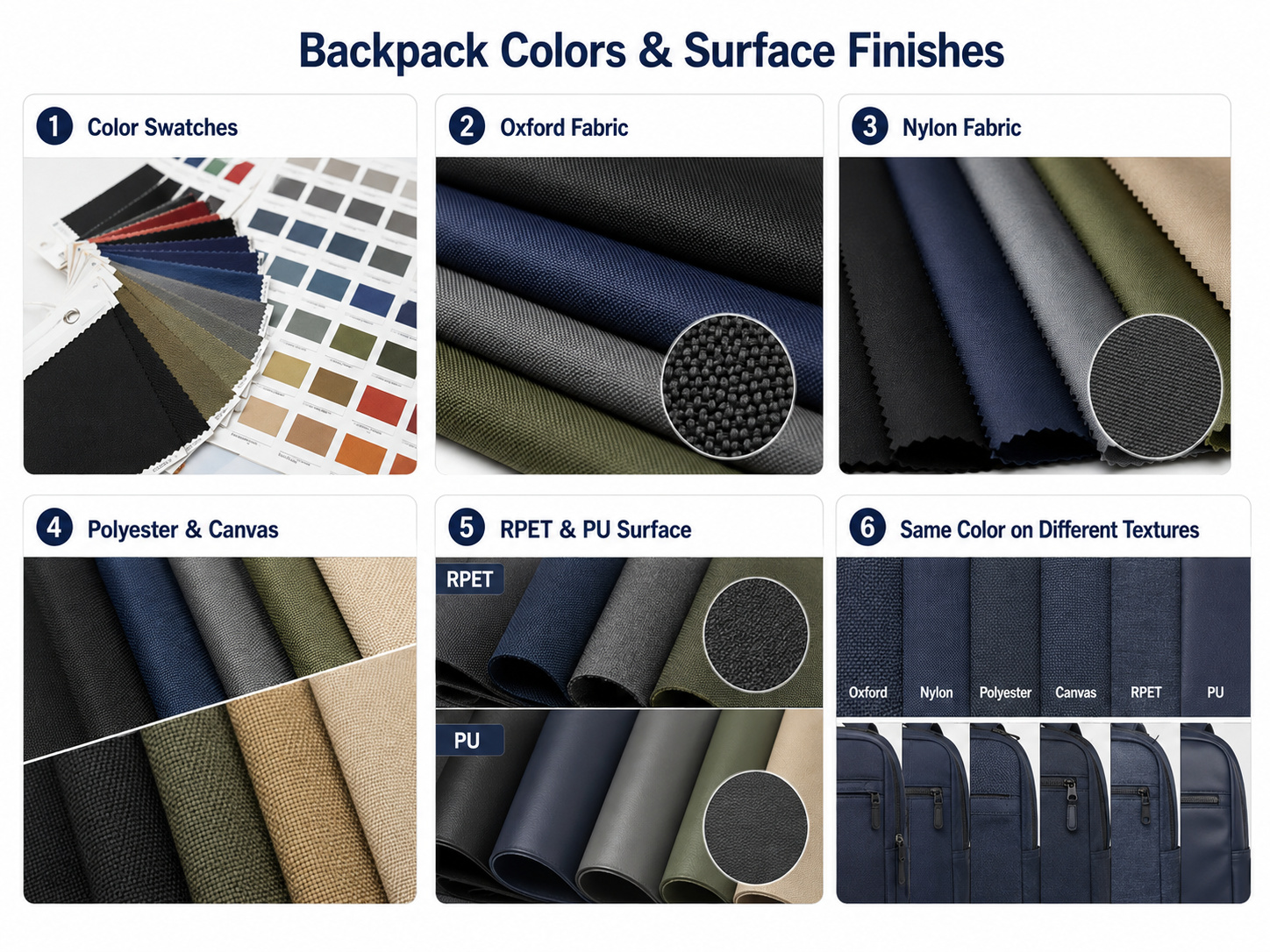
Color and surface appearance are important parts of an OEM backpack specification because the same color can look different on Oxford fabric, nylon, polyester, canvas, RPET or PU. Fabric weave, coating, texture and light reflection all affect the appearance of the finished backpack.
For custom and private-label projects, Navorex Bags reviews color requirements together with the selected material, backpack construction, accessories and branding before sample approval. The approved sample and confirmed material reference are then used as the standard for bulk production.
 Color Selection Starts With the Actual Material
A color should be confirmed on the material that will be used for production rather than from a screen image alone.
Oxford, nylon, polyester and canvas have different weave structures, while RPET and PU materials can also produce different visual effects depending on the selected specification. A dark navy, gray or green may therefore appear slightly different when transferred from one material to another.
For this reason, color review is normally connected with Materials & Fabric Options. Buyers can provide a physical color reference, fabric swatch, existing backpack or clearly defined design reference for evaluation.
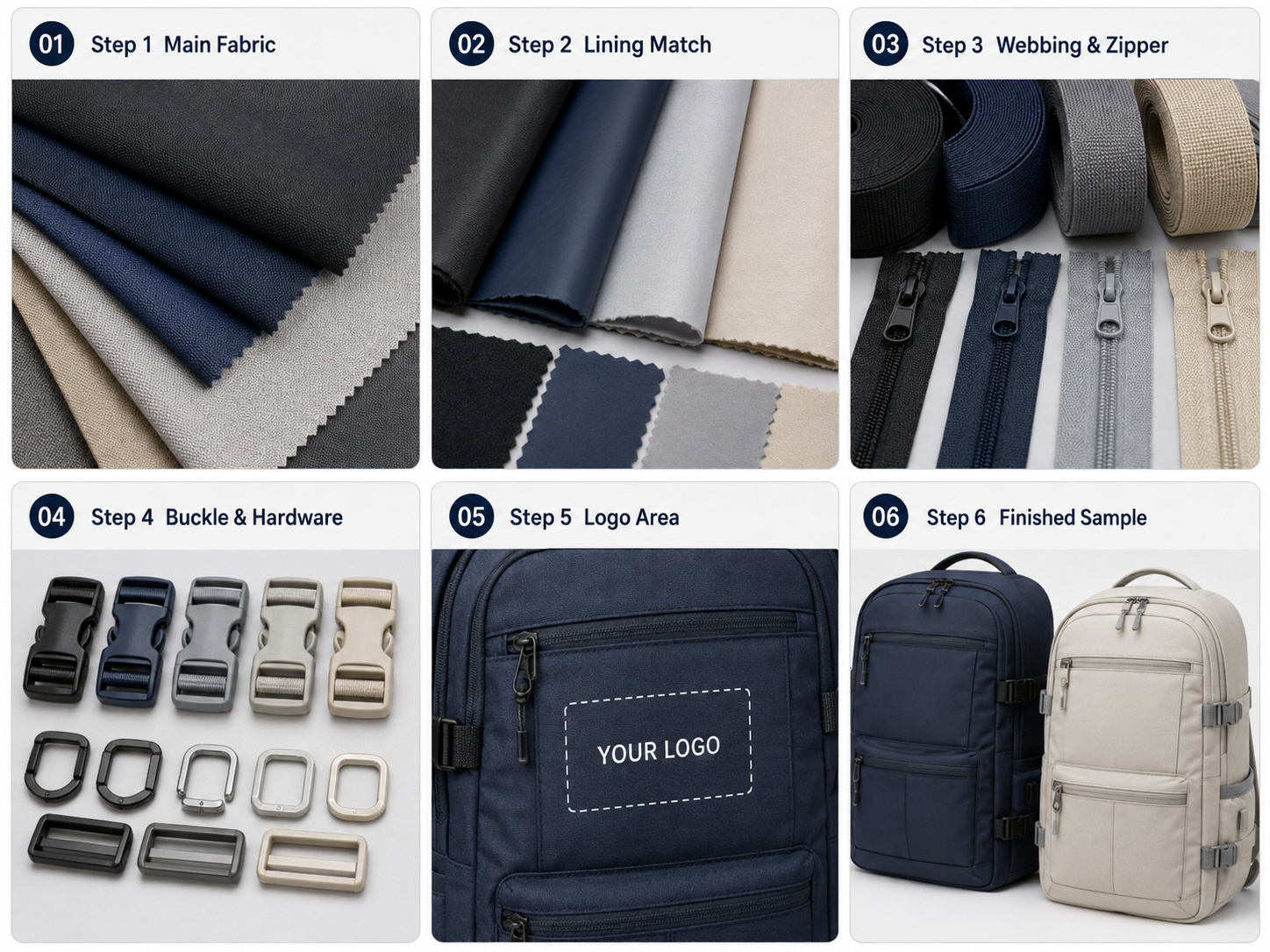
Where several materials are combined in one backpack, the outer fabric, lining, webbing, mesh and visible components should be reviewed together before the sample is approved.
Surface Texture and Finish Affect the Final Appearance
Backpack surface appearance is influenced by more than color.
A tightly woven nylon can look smoother than a heavier Oxford fabric. Canvas normally shows a more visible woven texture, while PU can provide a different surface character from traditional woven fabrics. Coated or specially finished materials may also change how light reflects from the backpack.
The required finish should therefore be defined through actual material references and the production sample rather than broad terms such as “matte,” “smooth” or “premium” without a physical standard.
Material thickness and surface treatment can also affect cutting, sewing, folding and the shape of completed panels. These factors should be reviewed before bulk material is prepared.
Coordinate Fabric Color With Zippers, Webbing and Accessories
A backpack often combines several visible components, so the main fabric color is only one part of the overall appearance.
Zippers, zipper pulls, buckles, webbing, mesh and lining may need to match the main fabric or provide an intentional contrast. Available component colors can also affect MOQ and development feasibility.
For projects requiring specific component combinations, buyers can review Zippers, Buckles & Accessories together with the fabric color.
Branding should also be considered at this stage. Logo visibility and contrast can change significantly between dark, light, textured and smooth surfaces, so artwork should be reviewed against the actual backpack material through our Logo & Branding Options process.
 Sample Approval Before Bulk Color Production
Standard backpack samples typically require about 5–10 working days. Projects involving special materials, less common colors or more complex development may require around 10–15 days.
During sample review, the buyer should confirm the main fabric color, lining, visible components, surface appearance and branding together. The approved sample then becomes the reference for bulk production.
Standard constructions usually start around 300–500 pcs. Special color requirements or materials that need project-specific sourcing may require higher quantities depending on availability.
After specification and sample approval, bulk production normally takes around 25–40 days, depending on order quantity, material readiness and construction complexity.
What to Provide for Color and Finish Review
For an accurate review, provide the backpack style, selected material, required color reference, estimated quantity, branding requirements and any important surface or texture preference.
A physical swatch, reference backpack or approved material sample is particularly useful when color consistency and surface appearance are important to the project. Clear confirmation at the sampling stage helps reduce differences between the expected design and the finished bulk order.