
Backpack material selection affects product appearance, weight, structure, durability, sewing requirements and final cost. For OEM and private-label projects, Navorex Bags reviews the outer fabric together with lining, foam, mesh, webbing and related components before sample development.
Available materials include polyester, nylon, Oxford fabric, canvas, RPET, PU, mesh, lining fabrics and foam. The most suitable option depends on backpack type, intended use, construction, target price and buyer specification rather than one material being suitable for every project.
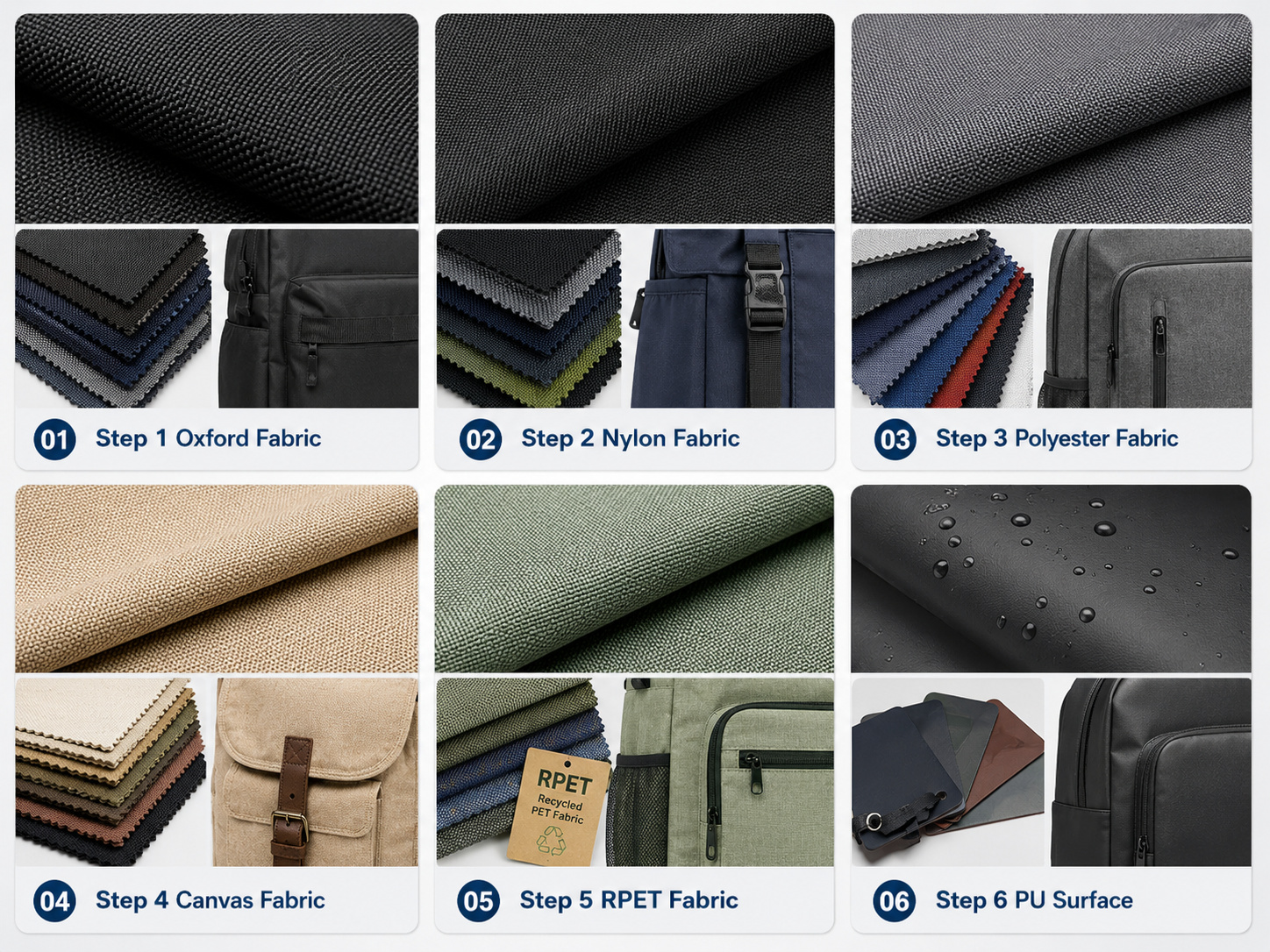
Outer Fabric Options for Different Backpack Programs
The outer fabric should be selected around the intended backpack application and required construction.
Polyester and Oxford fabrics are commonly reviewed for school, travel, promotional and general-purpose backpack programs because they can be developed in different weights, surface textures and colors.
Nylon can be considered where buyers require a lighter or different hand feel, depending on the selected specification and target cost.
Canvas provides a more textured and structured appearance and is often suitable for casual, travel or selected private-label designs.
RPET can also be reviewed for projects that specifically request recycled-material options. Material claims, testing or certification requirements should be confirmed separately when required by the destination market or buyer.
PU materials may be selected for particular fashion, business or detail applications where the required surface appearance differs from woven fabric.
Material selection should be confirmed before the backpack structure is finalized because fabric thickness and handling can affect sewing, edge finishing, reinforcement and the shape of the finished product.
Color, Texture and Material Matching
Color should not be confirmed independently from the actual material. The same requested color can appear different on Oxford, nylon, canvas or PU because surface texture and light reflection vary.
For OEM development, fabric swatches or available color references can be reviewed before sampling. If the backpack combines several materials, the outer fabric, lining, mesh, webbing and visible accessories should be checked together so that the finished product has a controlled overall appearance.
Buyers who also need to define backpack dimensions and internal organization can review our Size, Capacity & Compartment Design options together with material selection.
Lining, Mesh, Foam and Supporting Materials
The visible outer fabric is only one part of the backpack specification.
Lining affects internal appearance and compartment construction. Mesh may be used for selected side pockets, organizer sections or back-panel structures. Foam can be reviewed for laptop protection, shoulder straps and padded backpack sections where additional structure or cushioning is required.
Webbing and related components also need to match the selected construction. For projects with specific zipper, buckle or trim requirements, these details can be reviewed through our Zippers, Buckles & Accessories page.
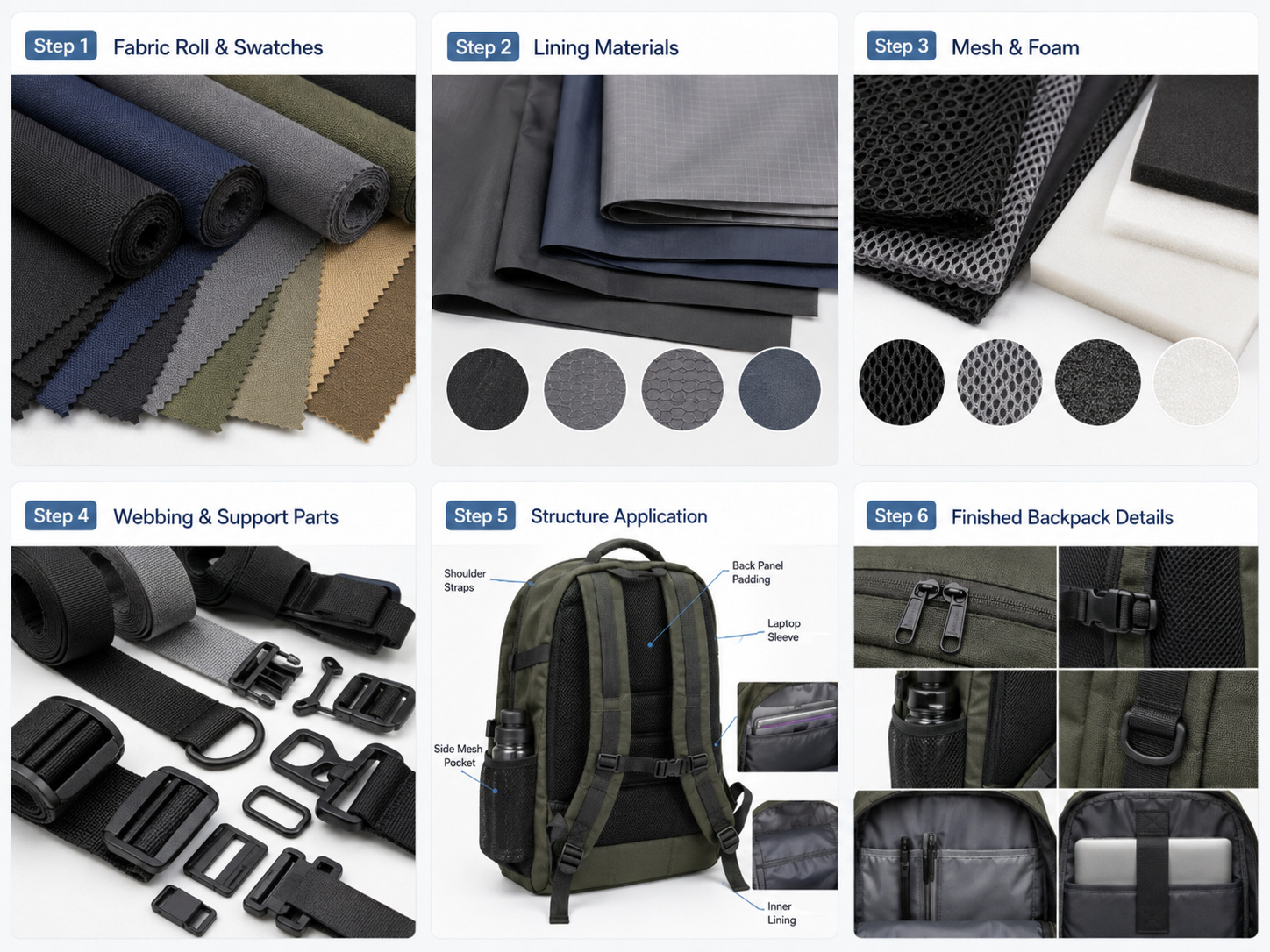 Material Confirmation Before Sampling
Before preparing an OEM sample, we normally confirm the selected fabric type, color, lining, foam, mesh and important supporting materials together with backpack dimensions, compartment layout, quantity and target application.
Material availability can affect MOQ, sampling time and production timing. Standard backpack constructions usually start around 300–500 pcs, while projects requiring special colors, less common materials or deeper specification changes may require higher quantities.
Standard samples typically take about 5–10 working days. Projects involving special materials or more complex development may require around 10–15 days.
The approved sample and confirmed material specification are then used as references for material preparation and bulk production.
What to Provide for a Material Review
For a more accurate material recommendation and quotation, buyers should provide the backpack type, intended use, preferred material or reference sample, required color, dimensions or capacity, estimated quantity and target market.
A physical reference sample, drawing or tech pack is particularly useful when the material must match a specific appearance, weight or construction. If branding will be applied to the selected fabric, the logo method and artwork should also be reviewed early through our Logo & Branding Options page.
Clear material requirements at the beginning of the project help reduce sample revisions and make bulk-production specifications easier to control.